Aluminum Oxide Nanoparticles/Nanopowder and Applications
Aluminum Oxide and It's Properties
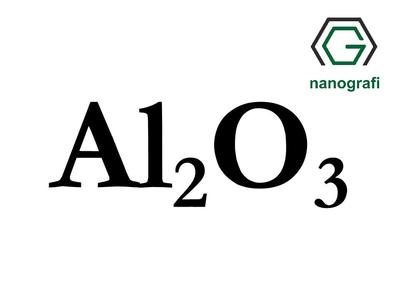
Aluminum Oxide is a chemical compound that consists of Aluminum metal and Oxygen with the chemical formula of Al2O3. Aluminum Oxide is commonly called alumina. This compound is insoluble in water and is significant in its use to produce aluminum metal, as an abrasive owing to its hardness, and as a refractory material owing to its high melting point.
Application Areas of Aluminum Oxide Nanoparticles/Nanopowder
Since Aluminum Oxide nanoparticles/nanopowder have high toughness, fire resistance, anti-friction and insulating properties, they are used in ceramics and composites. You may use Aluminum Oxide nanoparticles/nanopowder in production of burner discharge lamp, integrated circuits, prostheses, etc. Aluminum oxide nanoparticles/nanopowder has excellent properties for far infrared emission. These nanoparticles/nanopowder used in fiber fabric products and high pressure sodium lamp as far-infrared emission and thermal insulation materials. Aluminum oxide nanoparticles/nanopowder can also be used as adsorbent to capture hydrocarbon impurities from the air and to extract fluorine from a variety of media In the production of high purity crucibles, furnace tubes and cutting tools, Aluminum Oxide nanoparticles/nanopowder are used. Aluminum Oxide nanoparticles/nanopowder are used to improve toughness, wear resistance, thermal fatigue resistance, and ceramic density for rubber, plastics, and ceramics. The another important usage area for Aluminum Oxide nanoparticles/nanopowder is catalysis reactions as
catalyst.
Technical Properties of Our Al2O3 (Aluminum Oxide) Nanoparticles/Nanopowder, gamma, 18nm, Purity 99.5+%, Hydrophilic Product
| Purity % | 99.5+ |
| Color | white |
| AVERAGE PARTICLE SIZE (nm): | 18 |
| SPECIFIC SURFACE AREA (m2/g): | 140 |
| SPECIFIC HEAT CAPACITY (J/Kg.K): | 890 |
| True Density (Kg/m3) | 3900 |
| Morphology | nearly spherical |
You may buy Al2O3(Aluminum Oxide) Nanoparticles/Nanopowder, gamma, 18nm, Purity 99.5+%, Hydrophilic from the link below:
Technical Properties of Our Al2O3 (Aluminum Oxide) Nanoparticles/Nanopowder, gamma, 4nm, Purity 99.995%, Hydrophilic Product
| Purity % | 99.995 |
| Color | white |
| AVERAGE PARTICLE SIZE (nm): | 4 |
| SPECIFIC SURFACE AREA (m2/g): | >20 |
| SPECIFIC HEAT CAPACITY (J/Kg.K): | 890 |
| True Density (Kg/m3) | 3900 |
| Bulk Density (g/ml) | 0.20 |
| Loss on Drying (wt%) | 2.0 |
| Loss on Ignition (wt%) | .3,4 |
| PH | 7.0 |
| Morphology | nearly spherical |
| Crystallographic Structure | rhombohedral |
You may buy Al2O3(Aluminum Oxide) Nanoparticles/Nanopowder, gamma, 4nm, Purity 99.995%, Hydrophilic from the link below:
Technical Properties of Our Al2O3 (Aluminum Oxide) Nanoparticles/Nanopowder, gamma, 78nm, Purity 99.55%, Hydrophilic Product
| Purity % | 99.55 |
| Color | white |
| AVERAGE PARTICLE SIZE (nm): | 78 |
| SPECIFIC SURFACE AREA (m2/g): | 60 |
| Morphology | nearly spherical |
You may buy Al2O3 (Aluminum Oxide) Nanoparticles/Nanopowder, gamma, 78nm, Purity 99.55%, Hydrophilic from the link below:
Technical Properties of Our Al2O3 (Aluminum Oxide) Nanoparticles/Nanopowder, alpha, 78nm, Purity 99.5+%, Hydrophilic Product
| Purity % | 99.5+ |
| Color | white |
| AVERAGE PARTICLE SIZE (nm): | 78 |
| Grain Siza (nm) | 27 |
| SPECIFIC SURFACE AREA (m2/g): | >20 |
| Morphology | nearly spherical |
| Crystallographic Structure | rhombohedral |
You may buy Al2O3 (Aluminum Oxide) Nanoparticles/Nanopowder, gamma, 78nm, Purity 99.55%, Hydrophilic from the link below:
Technical Properties of Our Al2O3 (Aluminum Oxide) Nanoparticles/Nanopowder, alpha, 136nm, High Purity 99.95%, Hydrophilic Product
| Purity % | 99.95 |
| Color | white |
| AVERAGE PARTICLE SIZE (nm): | 136 |
| SPECIFIC SURFACE AREA (m2/g): | >20 |
| Density (g/cm3) | 4 |
| Melting Point (°C) | 2050 |
| Boiling Point (°C) | 2990 |
| Crystallographic Structure | rhombohedral |
You may buy Al2O3 (Aluminum Oxide) Nanoparticles/Nanopowder, alpha, 136nm, High Purity 99.95%, Hydrophilic from the link below:
Technical Properties of Our Al2O3 (Aluminum Oxide) Nanoparticles/Nanopowder, alpha, 290nm, High Purity 99.95%, Hydrophilic Product
| Purity % | 99.95 |
| Color | white |
| AVERAGE PARTICLE SIZE (nm): | 290 |
| SPECIFIC SURFACE AREA (m2/g): | >5 |
| Density (g/cm3) | 4 |
| Melting Point (°C) | 2050 |
| Boiling Point (°C) | 2990 |
| Crystallographic Structure | rhombohedral |
You may buy Al2O3 (Aluminum Oxide) Nanoparticles/Nanopowder, alpha, 290nm, High Purity 99.95%, Hydrophilic from the link below:
Technical Properties of Our Al2O3 (Aluminum Oxide) Nanoparticles/Nanopowder, alpha, 180nm, High Purity 99.95%, Hydrophilic Product
| Purity % | 99.95 |
| Color | white |
| AVERAGE PARTICLE SIZE (nm): | 180 |
| SPECIFIC SURFACE AREA (m2/g): | >10 |
| Density (g/cm3) | 4 |
| Melting Point (°C) | 2050 |
| Boiling Point (°C) | 2990 |
| Crystallographic Structure | rhombohedral |
You may buy Al2O3 (Aluminum Oxide) Nanoparticles/Nanopowder, alpha, 180nm, High Purity 99.95%, Hydrophilic from the link below:
Technical Properties of Our Al2O3 (Aluminum Oxide) Nanoparticles/Nanopowder, alpha/gamma, 48nm, 85% alpha : 15% gamma Product
| Purity (wt%) | 99.9 |
| Color | white |
| AVERAGE PARTICLE SIZE (nm): | 48 |
| SPECIFIC SURFACE AREA (m2/g): | >30 |
| Loss on Drying (wt%) | <1 |
| Loss on Ignition (wt%) | <2 |
| pH | 7 |
You may buy Al2O3 (Aluminum Oxide) Nanoparticles/Nanopowder, alpha/gamma, 48nm, 85% alpha : 15% gamma from the link below:
Technical Properties of Our Al2O3 (Aluminum Oxide) Nanoparticles/Nanopowder, amorphous, 45nm, Al2O3 92wt%, H2O 6-7wt% Product
| Aluminum Oxide (wt%) | 92.0 |
| H2O (wt%) | 8.0 |
| Color | white |
| AVERAGE PARTICLE SIZE (nm): | 45 |
| SPECIFIC SURFACE AREA (m2/g): | >80 |
| PH | 4,5 |
| Nanoparticles/Nanopowder Morphology | nearly spherical |
| Crystal Morphology | amorphous |
You may buy Al2O3 (Aluminum Oxide) Nanoparticles/Nanopowder, amorphous, 45nm, Al2O3 92wt%, H2O 6-7wt% from the link below:
Technical Properties of Our Al2O3 (Aluminium Oxide) Nanoparticles/Nanopowder: Aluminic Ester=98.1:1.2, alpha, 55nm, Super Hydrophobic Product
| Alpha Aluminum Oxide (wt%) | 98.1 |
| Aluminum Acid Ester (wt%) | 1.2 |
| Color | white |
| AVERAGE PARTICLE SIZE (nm): | 55 |
| SPECIFIC SURFACE AREA (m2/g): | >20 |
| Loss on Drying (wt%) | 0,5 |
| Loss on Ignition (wt%) | .1,7 |
| PH | 6 |
| Morphology | nearly spherical |
You may buy Al2O3 (Aluminium Oxide) Nanoparticles/Nanopowder: Aluminic Ester=98.1:1.2, alpha, 55nm, Super Hydrophobic from the link below:
Comments
Post a Comment