
Magnesium Hydroxide Nanoparticles/Nanopowder and Applications

General Information about Magnesium Hydroxide  
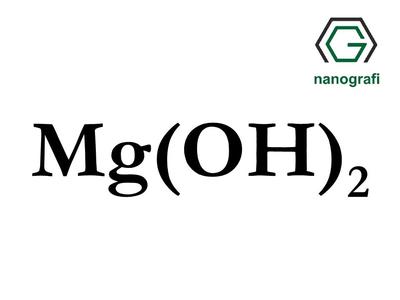
                                       
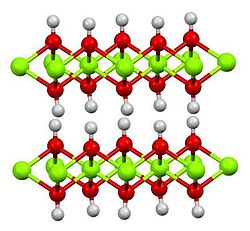
Magnesium hydroxide is the inorganic compound with the chemical formula Mg(OH)2. It occurs in nature as the mineral brucite. It is a white solid with low solubility in water Magnesium hydroxide is a common component of antacids, such as milk of magnesia, as well as laxatives.
                                                                                                                                                                               Magnesium Hydroxide Nanoparticles/Nanopowder and Their Applications       
                                                      
Magnesium Hydroxide nanoparticles/nanopowder can be used in fire retarding and smoke suppressing. These nanoparticles/nanopowder undergo endothermic decomposition releasing water which enables it to delay ignition and to dilute combustible gases. In industry Magnesium Hydroxide nanoparticles/nanopowder are used to neutralize acidic wastewaters. Magnesium Hydroxide nanoparticles/nanopowder can be evenly dispersed in PA, PP, ABS, PVC, and other rubber and plastic products.
                                                                                                                                                                            Technical Properties of Our Magnesium Hydroxide (Mg(OH)2) Nanoparticles/Nanopowder, 8 nm, Purity 99.5% Product
Purity %99.5
Colorwhite
AVERAGE PARTICLE SIZE (um):8
SPECIFIC SURFACE AREA (m2/g):>95
Bulk Density (g/cm3)0,2
True Density (g/cm3).2,4
Loss of Weight in Drying (%)1,8
Loss of Weight on Ignitioin (%)31.0
                                                                                                                                                                                      You may buy Magnesium Hydroxide (Mg(OH)2) Nanoparticles/Nanopowder, 8 nm, Purity 99.5% from the link given below:

Comments

Popular posts from this blog

New Way of Deaf-Mute Communication with 3D Graphene

Image retrieved from: http://blogs.rsc.org/cc/2016/09/01/3d-graphene-adds-dimension-to-deaf%E2%80%93mute-communication/ Chinese scientists have developed wearable electronic device with conductive 3D graphene structure to translate sign language into written text. This technology can be applied by injecting graphene ink from a syringe under printed electronic field. For medical field, such as adhesive patches which determine heart, brain signal and neural activity, wearable and bio-integrated medical devices are very important. Due to noticeable properties of cast graphene, for example a 2D honeycomb lattice, excellent mechanical and electrical behaviors, Graphene has an important material in warble technology. However, it is difficult to preserve advantages of Graphene material in a 3D material which has an information about forces from every angle. Yanlin Song  and co-workers at the University of the Chinese Academy of Sciences, Beijing, and Shenyang Jianzhu University...

Titanium Carbide Powders and Applications

Titanium carbide which has the chemical formula of TiC attracted great interest for many structural applications due to its extremely high melting temperature, high hardness, high chemical resistance and good electrical conductivity. Therefore titanium carbide can be used in cutting tools, grinding wheels, wear-resistant coatings, high temperature heat exchangers, magnetic recording heads, turbine engine seals, and bullet-proof vests, etc. In addition, a promising field of application comprises plasma and flame spraying processes in air, where titanium carbide-based powders show high-phase stability. TiC(Titanium Carbide Powder) (325 mesh, 99,9+%)  can also be used in biomedical implant devices. Materials used for biomedical implant devices must satisfy a variety of property demands, which are often mutually exclusive. Further, different parts of a device demand different material properties. These factors often make it difficult to manufacture a medical device using a...

Carbon Nanotubes Doped with Graphene Nanopowder and Applications

Carbon nanotubes and graphene are different forms of carbon atom based materials. They have different properties and can be used in various applications. But what happens if we use them as a hybrid structure? The excellent mechanical, physical, and chemical properties of low-dimensional carbon materials like graphene and carbon nanotube have enabled them as promising building blocks for three-dimensional nanoarchitectures. In this regard, extensive interests have been attracted to synthesize graphene and carbon nanotube hybrid structures. Earlier works suggested that  Carbon Nanotubes Doped with Graphene Nanopowder (52 wt% Graphene )  is a promising solution for quick energy dissipation, which could enhance interface thermal conductivity of the ‘building blocks’ for future nanoscale mechanical and electrical devices. In the electricity perspective, it is found that ‘CNT pillared-graphene’ system would extend the excellent electrical conductivity of graphene and nanotube to ...