
Silicon Nitride Nanoparticles/Nanopowder and Applications

General Information about Silicon Nitride  
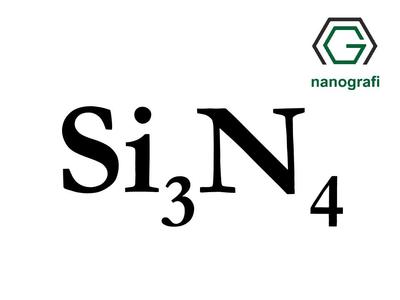
                                       
Silicon nitride is a chemical compound of the elements silicon and nitrogen with the formula of Si3N4. Si3N4 is the most thermodynamically stable of the silicon nitrides. It is a white, high-melting-point solid that is relatively chemically inert. It has a high thermal stability.
Applications of Silicon Nitride Nanoparticles/Nanopowder
Silicon Nitride nanoparticles/nanopowder are super hard materials. It is used in manufacturing structure devices such as chemical industry, aviation, metallurgy, mechinery, aerospace, and energy industry. Silicon Nitride nanoparticles/ nanopowder are also used in surface treatment of metals and other materials such as cutting tools, turbine blades and rotors, molds, and cylinder wall coatings. Silicon Nitride nanopowders/nanoparticle are used in coatings and other applications for sleeves, valves, cutting edges, bearings, turbines and various other surfaces prone to extensive wear and tear due to their benefits in handling friction and general wear. Silicon Nitride nanopowders/nanoparticle provide resistance to oxidation at high temperatures and corrosion resistance. Silicon Nitride nanoparticles/ nanopowder can be added different compounds like graphite, rubber, ceramics, metal alloys to obtain strong composites. Silicon Nitride nanoparticles/nanopowder are used in spray nozzles, spray pipes for rockets and missiles.

Technical Properties of Our Si3N4 (Silicon Nitride) Nanoparticles/Nanopowder, Amorph. 99.5%,20-35 nm Product
Purity (%)99.5
Colorwhite
Average Particle Size (nm)20-35
Bulk Density (g/cm3)0.05
True Density (g/cm3)3,32
Specific Surface Area (m2/g)40.0-125.0
Zeta Potential (mV)-21,5
Morphologyspherical
Manifacturing MethodPlasma Arc Vapor
You may give an order of Si3N4 (Silicon Nitride) Nanoparticles/Nanopowder, Amorph. 99.5%,20-35nm from the link given below:

Technical Properties of Our Si3N4 (Silicon Nitride) Nanoparticles/Nanopowder, Beta, 99.6%, 760nm Product
Purity (%)99.6
Colorgrey-white
Average Particle Size (nm)760nm
You may give an order of Si3N4 (Silicon Nitride) Nanoparticles/Nanopowder, Beta, 99.6%, 760nm from the link given below:


Comments

Popular posts from this blog

Usage of Silver Conductive Adhesive Paste in Corrosion Protection

In electronics, solders are main material to connect electrical components to substrates which are generally printed circuit boards. Although they are cheap, they are not effective if long term performance is considered since solders have low resistivity to corrosion relatively. Since corrosion reduce reliability, the cost of advanced technological systems such as RADAR, SONAR, LIDAR and more increase. In addition, small signals can be lost, and in huge data transfer, some of the data can be lost also especially which may lead catastrophic failures in critical systems. For instance, surface to air missiles can be launched to target which is not exist if the data coming from detection systems is noisy. Therefore, corrosion protection is necessary, and  silver conductive adhesive paste  is an essential candidate to replace PbSn solders due to its resistivity to corrosion. Silver conductive adhesive paste provide not only noisy reduction but also electromagnetic interference whi...

Reduced Graphene Oxide and Applications

Graphene oxide (GO)  is a type of graphene that contains oxygen functional groups and has some interesting properties different than those of graphene. By reducing graphene oxide,  reduced graphene oxide  is obtained which is abbreviated to rGO. In this process, the functional groups of graphene are removed but it still contains residual oxygen, hetereatoms and structural defects which decrease its quality. Having less-quality compared to pristine graphene, rGO is still an outstanding material for various applications since it resembles an attractive cost and manufacturing processes compared to the pristine graphene. Especially, it is preferred in applications that call for a large amount of material. Depending on the method of preparation of reduced graphene oxide, properties and morphology of the rGO can vary.  Some preparation methods  of reduced graphene oxide include: treating graphene oxide with hydrazine hydrate at 100°C for 24 hours exposure to h...

Differences Between Cuprous Oxide (Cu2O) and Copper (Cupric) Oxide (CuO) Nanoparticles

Copper,  which is a d block element, is named as cuprous or cupric based on the electronic configuration. The main difference between cuprous and cupric is that  cuprous is copper +1 cation  whereas cupric is copper +2 cation. When copper is reacted with oxygen, two stable compounds Cu2O and CuO form.   Copper Oxide  is the inorganic compound with the formula CuO (Figure 1) also known as  ‘cupric oxide’ . In this form, Cu is in the form of Cu+2 and the electron configuration of the Cu changes from [Ar]3d104s1 to [Ar]3d94s0. It is known as tenorite as a mineral (Figure 2). CuO can be obtained by using pyrometallurgical processes. Figure 1: Copper Oxide (CuO) Powder Cuprous Oxide  is the other stable compound of Copper with formula Cu2O. In this form, Cu is in the form of Cu+1. Its electron configuration changes from [Ar]3d104s1 to [Ar]3d104s0 so it is more stable compared to copper(II) oxide. CuO(Figure 3) is generally obtained via the oxidat...