
Gadolinium Oxide Properties and Applications

Gadolinium oxide (Gd2O3) compound is the oxide form of one of the rare earth metal gadolinium. Gadolinium oxide is also known as gadolinium sesquioxide, gadolinium trioxide and Gadolinia. The color of the gadolinium oxide is white. Gadolinium oxide is odorless, not soluble in water, but soluble in acids. Gadolinium oxide could be appeared in three different structures: cubic (c-Gd2O3), monoclinic (m-Gd2O3) and hexagonal (h-Gd2O3). The cubic gadolinium oxide changes to monoclinic structure at 1200oC. While the hexagonal gadolinium oxide phase exists above melting point which is at temperature of 2420oC. Gadolinium oxide is the most available form of the pure gadolinium. Gadolinium oxide has physiochemical properties like the crystallographic stability up 2325oC, high mechanical strength, excellent thermal conductivity, and a wide band optical band. The gadolinium oxides has a variety of applications.
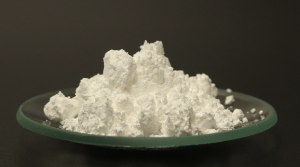
Gadolinium oxide is used in magnetic resonance and fluorescence imaging
Gadolinium oxide is used as enhancer of the scan clarity in MRI
Gadolinium oxide is used as contrast agent for MRI
Gadolinium oxide is used in fabrication of the base for Judd-Ofelt high-efficiency luminescent devices
Gadolinium oxide is used in doping-modification of thermally treated nanocomposites
Gadolinium oxide is used in semi-commercial manufacturing of magneto caloric materials
Gadolinium oxide is used for making optical glasses
Gadolinium oxide is used as burnable poison, in other words, gadolinium oxide is used as part of the fresh fuel in compact reactors to control the neutron flux and the power 

Comments

Popular posts from this blog

Molybdenum Trioxide Nanoparticles/Nanopowder and Applications

General Information about Molybdenum Trioxide                                                     Molybdenum trioxide is chemical compound with the formula MoO3. Its chief application is as an oxidation catalyst and as a raw material for the production of molybdenum metal.  Molybdenum Trioxide  is a very light blue powder. Molybdenum Trioxide Nanoparticles/Nanopowder and Their Applications                                                    Like many  nanoparticles/nanopowder , Molybdenum Trioxide nanoparticles/nanopowder are used as catalysts. These catalysis reactions include hydrogenation catalysis and cracking catalysis. Molybdenum Trioxide nanoparticles/  nanopowder are useful for...

Improving Dialysis Process with Graphene

Researchers from Mechanical and Electrical Engineering Departments of MIT recently showed that graphene is a powerful material candidate for use in the dialysis systems (such as hemodialysis machines in medical institutes for filtering human blood). In order to prepare graphene as a dialysis material, researchers used a procedure opposite to the general treatments that nanotechnology people use. Dialysis is a process of filtering different solutions such as human blood by a membrane in order to remove waste molecules, drugs, chemical residues from the solution. In some cases, the process can be used for purification of chemicals or isolation of different molecules for medical diagnosis. It is an essential process for scientists especially in the medical operations. Image Retrieved From: http://www.graphene-nownano.manchester.ac.uk/our-research/examples-of-current-projects/fundamental-science/use-of-graphene-as-bio-membrane/ The traditional membranes used in dialysis are thick ...

Graphene Oxide Dispersion

Graphene oxide refers to a mono-atomic layer material obtained when graphite crystals are oxidized. This is one of the graphene materials that are commercially available because of  its ability to dissolve in water  which makes the oxidation process suitable. In this article, we will talk about the  synthesis, the properties and some of the applications of graphene oxide dispersion in water . Seven Properties of Graphene Oxide Dispersion The properties of a material are defined through its structure, however, this material is very peculiar, since there is no unambiguous model of this material. Graphene Oxide dispersion offers remarkable physical, chemical and mechanical properties that give the opportunity to new applications. Graphene Oxide is amorphous , but, in general, graphene oxide can be described as a two-dimensional sheet containing honeycomb carbon atoms with functional groups of hydroxide and oxygen, unlike the graphene model that seeks to completely re...