
Indium Hydroxide Nanoparticles/Nanopowder and Applications

General Information about Indium Hydroxide 
                                       
Indium Hydroxide is the chemical compound with the formula In(OH)3. Indium Hydroxide appears as a white powder.
Indium Hydroxide Nanoparticles/Nanopowder and Usage Areas 
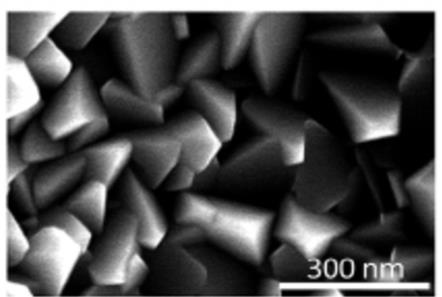
                                        
Indium Hydroxide nanoparticles/nanopowder are used as substitute for mercury as a battery inhibitor.
Technical Properties 
Purity %99.996
Colorwhite
AVERAGE PARTICLE SIZE (nm):15-65
Morphologynearly spherical
SPECIFIC SURFACE AREA (m2/g):>15
Bulk Density (g/cm3)0,6
True Density (g/cm3)4,5
Manufacturing Methodchemical precipitation


You may buy Indium Hydroxide (In(OH)3) Nanoparticles/Nanopowder, 15-65 nm, High Purity 99.996% from the link given below:

Comments

Popular posts from this blog

Molybdenum Trioxide Nanoparticles/Nanopowder and Applications

General Information about Molybdenum Trioxide                                                     Molybdenum trioxide is chemical compound with the formula MoO3. Its chief application is as an oxidation catalyst and as a raw material for the production of molybdenum metal.  Molybdenum Trioxide  is a very light blue powder. Molybdenum Trioxide Nanoparticles/Nanopowder and Their Applications                                                    Like many  nanoparticles/nanopowder , Molybdenum Trioxide nanoparticles/nanopowder are used as catalysts. These catalysis reactions include hydrogenation catalysis and cracking catalysis. Molybdenum Trioxide nanoparticles/  nanopowder are useful for...
Carbon Nanotubes Specifications and Properties Carbon Nanotubes, simply CNTs, are allotropes of carbon with a round and hollow nanostructure. These barrel shaped carbon molecules have crucial properties, which are significant for nanotechnology, hardware, optics and other different fields of materials science and innovation. The carbon nanotube’s excellent quality as a strong and firm material laid the basis on many applications. Not to mention carbon nanotubes exceptional heat conductivity, electrical and mechanical properties, Carbon Nanotubes are used as additives to diverse auxiliary materials. In terms of rigidity and flexibility Carbon Nanotubes are the stiffest and strongest materials. These quality outcomes from the covalent sp2 bonds framed between the individual carbon molecules. Unlike Graphene , Carbon Nanotubes are either conductive or semiconducting along the tubular hub. Carbon Nanotubes also have absorption, fluorescence properties. Bulk Carbon nanotubes are util...

Boron Carbide Nanoparticles and Their Applications

Boron carbide  which has the chemical formula of B 4 C is one of the hardest materials among the ceramics materials after diamond and boron nitride. In addition to its hardness, it has high thermal stability, low density, chemical inertness and neutron capture property. At temperature above 1200  o C, its hardness exceeds that of the diamond. Thus, it is a crucial material for high technology applications such as abrasive for polishing and grinding media, ceramic amour applications for personal purpose and equipment, blasting nozzles, ceramic bearings, semiconductor applications for dielectric barriers, medical and nuclear applications. B4C (Boron Carbide) Nanoparticles (99.5+%, 40-60nm, Hexagonal)  show an outstanding hardness among the ceramic materials. Therefore, boron carbide nanoparticles are a suitable material for many high performance applications. Boron carbide nanoparticles can be used as polishing, lapping and grinding material for hard mater...