 Uses of Graphene Sheet Film
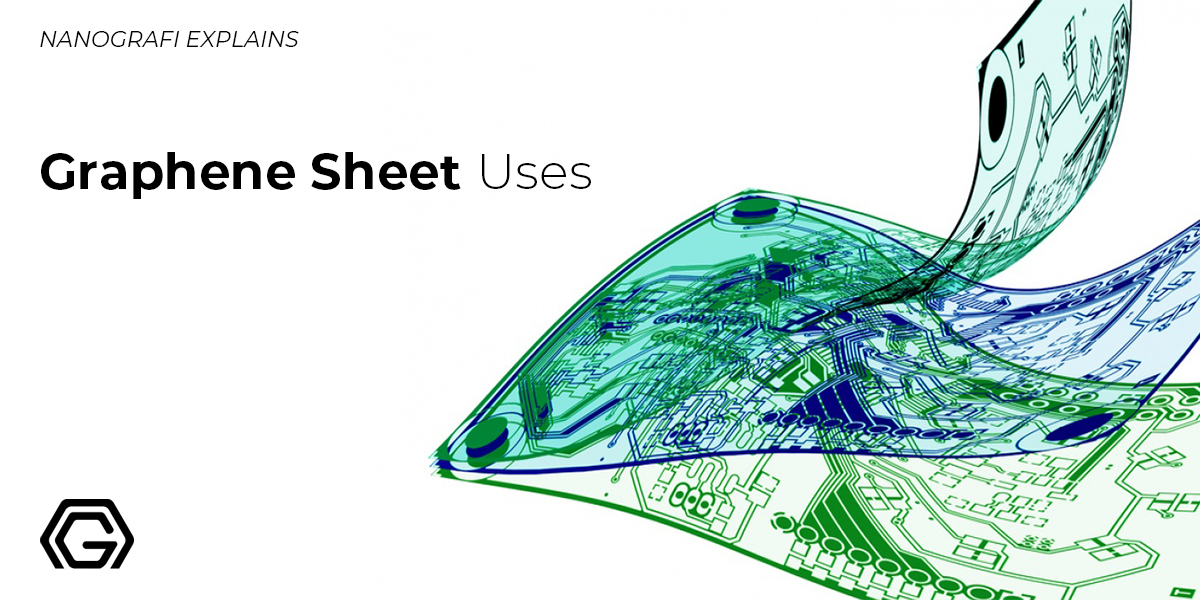
Graphene, the very much advanced and now acclaimed two-dimensional carbon allotrope, is as versatile a material as any found on Earth. Graphene’s astonishing properties as the lightest and the strongest material can be incorporated into an immense number of utilizations. Graphene can be used to make transparent conducting films. First, graphene sheets can be grown by chemical vapor deposition onto vast sheets of copper foil. After that the Graphene is covered with a thin layer of cement polymer, then copper backing is dissolved. Proceeding with rollers the Graphene is squeezed against another substrate (ex: PET), and the polymer layers are evacuated by heating, therefore leaving a film of Graphene.
Graphene applications:
Graphene is used in LCD touchscreens for cell phones, tablet and desktop PCs and TVs.
Graphene is used as An ultrafiltration medium to work as a barrier between two substances
Graphene is used in Water filtration frameworks, desalination systems and proficient and monetarily more reasonable biofuel creation.
For Related Products, please visit:

Comments

Popular posts from this blog

Molybdenum Trioxide Nanoparticles/Nanopowder and Applications

General Information about Molybdenum Trioxide                                                     Molybdenum trioxide is chemical compound with the formula MoO3. Its chief application is as an oxidation catalyst and as a raw material for the production of molybdenum metal.  Molybdenum Trioxide  is a very light blue powder. Molybdenum Trioxide Nanoparticles/Nanopowder and Their Applications                                                    Like many  nanoparticles/nanopowder , Molybdenum Trioxide nanoparticles/nanopowder are used as catalysts. These catalysis reactions include hydrogenation catalysis and cracking catalysis. Molybdenum Trioxide nanoparticles/  nanopowder are useful for...

Improving Dialysis Process with Graphene

Researchers from Mechanical and Electrical Engineering Departments of MIT recently showed that graphene is a powerful material candidate for use in the dialysis systems (such as hemodialysis machines in medical institutes for filtering human blood). In order to prepare graphene as a dialysis material, researchers used a procedure opposite to the general treatments that nanotechnology people use. Dialysis is a process of filtering different solutions such as human blood by a membrane in order to remove waste molecules, drugs, chemical residues from the solution. In some cases, the process can be used for purification of chemicals or isolation of different molecules for medical diagnosis. It is an essential process for scientists especially in the medical operations. Image Retrieved From: http://www.graphene-nownano.manchester.ac.uk/our-research/examples-of-current-projects/fundamental-science/use-of-graphene-as-bio-membrane/ The traditional membranes used in dialysis are thick ...

Graphene Tyres and Graphene Brake Pads

Could Graphene Use Create A Distruptive Technology In Tyre Sector? Almost every day, we see new applications emerging from graphene. The fact is certain; graphene is a disruptive technology that holds huge potential for commercialization. Graphene has abilities to open new markets and even replace existing materials or material technologies. A brand new application of graphene came out which is producing graphene tyres and brake pads. https://www.canadacarbon.com/brake-linings-gasket... In 2016 GraphChina (Graphene Innovation Conference); Sentury and Huagao launched their first electrostatic conducting graphene tyre on September 22nd. 2-3 weeks before the conference Sentury and Huagao officially announced their cooperation on the product. During the press conference, Sentury’s engineers (which is branded with the Landsail moniker), revealed that the latest test data shows their graphene-enhanced tyre offers; 1.8 meters shorter stopping distances (6 % improvement on conv...